
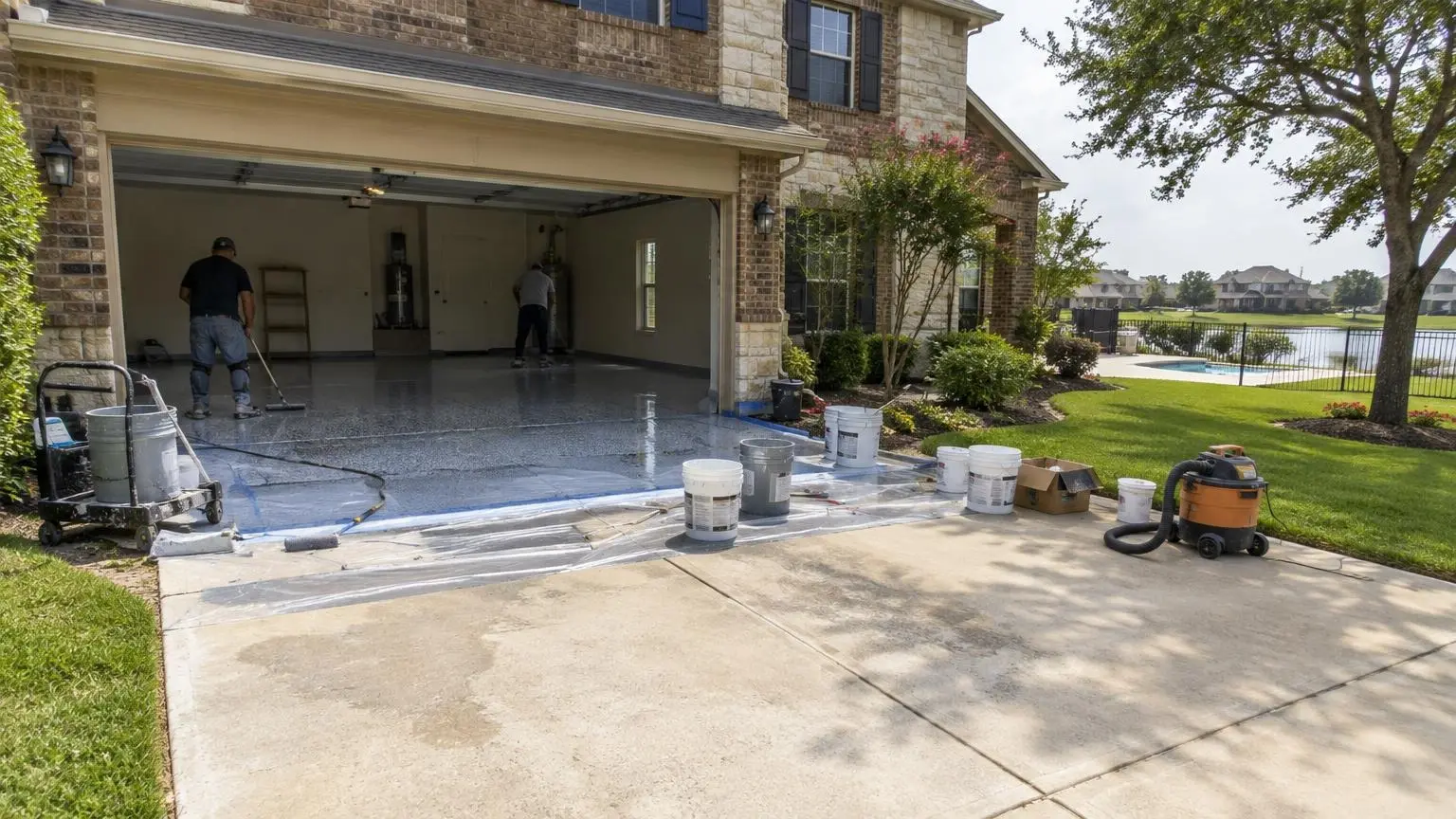
Work floors across Fort Bend County
Commercial & Shop Floor Epoxy in Sugar Land, TX
Heavier builds for wheels, fluids and foot traffic, with a written phasing plan so your doors stay open.
- Free on-site estimates with a slab moisture reading
- Written, itemized price before any work starts
- Diamond-ground prep and crack repair on every floor
Coatings for Concrete That Earns Its Keep
Commercial & Shop Floor Epoxy is our heavier class of coating, made for floors where people work instead of park. Wikipedia lists Methodist Sugar Land Hospital, Fluor, Schlumberger and Nalco Champion as the city's largest employers in 2019. Around those names sit hundreds of smaller operations: auto repair bays, fabrication shops, storage warehouses, dental and medical suites, fitness studios, salons and retail stores. Each one has a slab that takes wheels, spills and steady boots, and each one needs a coating chosen for that load.
What wears out a work floor
Bare concrete in a business fails in a few predictable ways. It sheds a fine gray dust that settles on stock and machinery. It soaks up oil until the stain is permanent. It wears into shallow ruts where carts and pallet jacks follow the same path every day. Thin paint or store-bought coatings peel first in those same lanes. Jack stands and loaded racks press hard on small spots, and a dropped wrench chips any coating that sits on a weak surface.
Building the system in layers
- Primer: soaks into the ground concrete and gives everything above it a grip
- Body coat: thick 100% solids epoxy that spreads loads and absorbs impact
- Grit layer: quartz or aggregate cast into the resin at overhead doors, wash bays and ramps
- Wear coat: a topcoat picked for the fluids you actually use, from motor oil and brake fluid to hospital disinfectants
- Lane and zone marking: contrasting colors for walkways, forklift paths and equipment areas
Bob Vila puts traffic-grade coatings such as polyurea and 100% solids epoxy at roughly 20% to 30% above standard options. On a floor that carries a business, that extra build usually pays for itself.
Summer heat inside metal buildings
Many shops here are metal buildings or bays with tall roll-up doors. Wikipedia puts typical Sugar Land summer highs near 95°F, and the air under a metal roof runs hotter by mid-afternoon. HomeGuide gives 60°F to 85°F as the working window for epoxy, with humidity under 85%. So from late spring into fall we pour at night or at first light, when the slab is coolest. Where a floor has to go on in the heat, polyaspartic is the better fit. HomeGuide lists its application range as -30°F to 140°F.
Storm season and wet doorways
Sugar Land gets about 48 to 50 inches of rain in a typical year, most of it from April through October. Delivery trucks, customers and staff carry that water through every door, and a wet glossy floor with a film of oil on it is a fall waiting to happen. We cast grit into the coating at entrances, wash bays and service lanes, and leave dry storage areas smoother so they sweep easily.
Old slabs and old coatings
A building that has changed tenants a few times often has layers of history on the floor: sealer, chipped paint, glue from carpet tiles, curing compound and patches in three shades of gray. We grind it all with ride-on and walk-behind machines, degrease oil-soaked spots, rebuild broken joint edges and fill cracks. Where the surface is too worn to coat, HomeGuide prices resurfacing at about $3 to $7 per square foot as a first step.
Keeping the doors open
A closed bay or a roped-off aisle costs you money every hour. We can split the job into zones, work nights and weekends, and use fast-curing topcoats where you need the floor back the next morning. The written plan names each zone, the hours it will be closed and the time it can take foot traffic and then vehicles.
Kitchens and medical suites
Commercial kitchens and exam rooms see hot water, sanitizers and daily mopping. Those floors usually call for a coving detail, where the coating turns up the wall a few inches so no seam sits at the floor line. Health and building rules apply, so we check with your inspector before we pick the system.
Upkeep plan
A scrubber or a daily sweep removes the grit that wears topcoats. Wipe up solvents and acids right away. When the main traffic lanes start to look dull, we recoat the wear layer before it thins to the body coat. That small job costs far less than a full redo.
What This Covers
Each commercial job is scoped zone by zone, based on what rolls, drips and walks across it.
High-build body coats
100% solids epoxy laid thick enough to carry carts, racks and jack stands.
Fluid-rated wear coats
Topcoats matched to the oils, cleaners and disinfectants your team uses.
Grit at doors and wash bays
Quartz or aggregate cast into the resin wherever water and oil collect.
Striping and zone colors
Walkways, forklift paths and work cells marked in contrasting resin.
Night and weekend scheduling
Work split into zones so the business keeps running during the job.
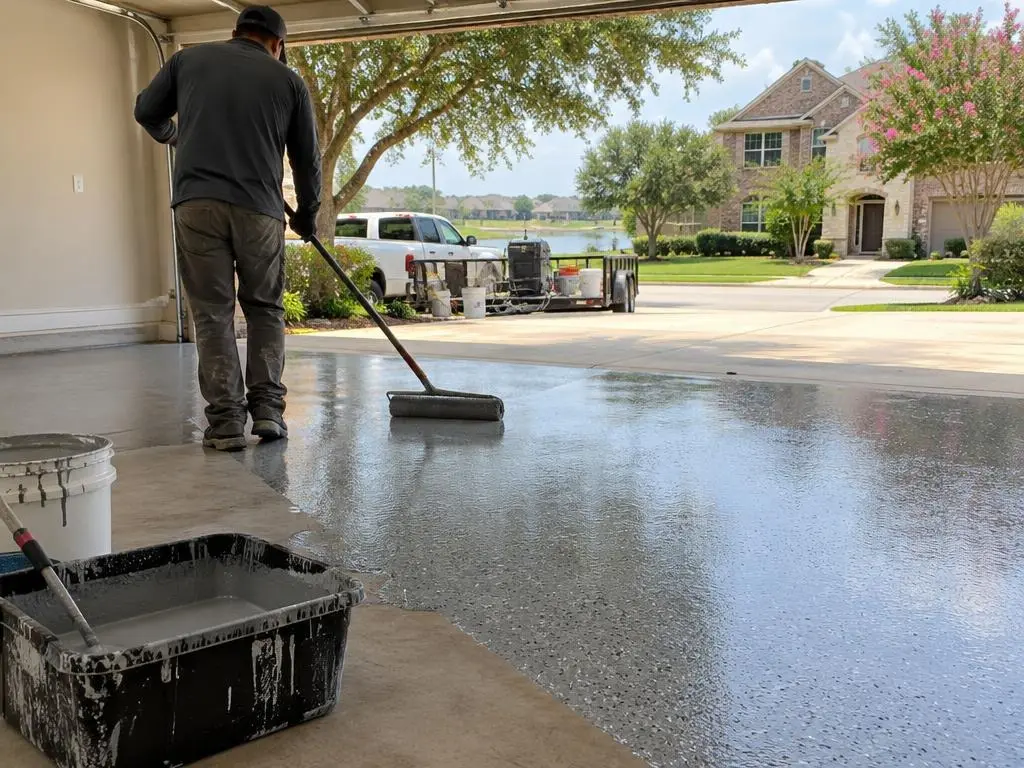
Commercial Floor Price Ranges
| Line item | National range |
|---|---|
| General installed epoxy, per sq ft | $4 to $10 |
| Upgrade to polyurea or 100% solids | roughly 20% to 30% higher |
| Crew labor, per hour | $50 to $150 |
| Resurfacing a worn slab first, per sq ft | $3 to $7 |
| Spot repairs to cracks and spalls | $25 to $250 |
National figures from HomeGuide (general epoxy and resurfacing) and Bob Vila (traffic-grade upgrade, labor and spot repairs). Floor size, slab condition, the chemicals involved and after-hours work all move a commercial total. Your written estimate is the price.
How It Works
1. Site visit
We walk the floor with you and note loads, fluids, doors and drains.
2. Written zone plan
You get the system, the zones and the closed hours for each one in writing.
3. Grind and repair
Machines strip old layers, oil spots get degreased, and joints and cracks get rebuilt.
4. Coat and hand back
Body coat, grit, wear coat and striping go down, then each zone reopens on schedule.
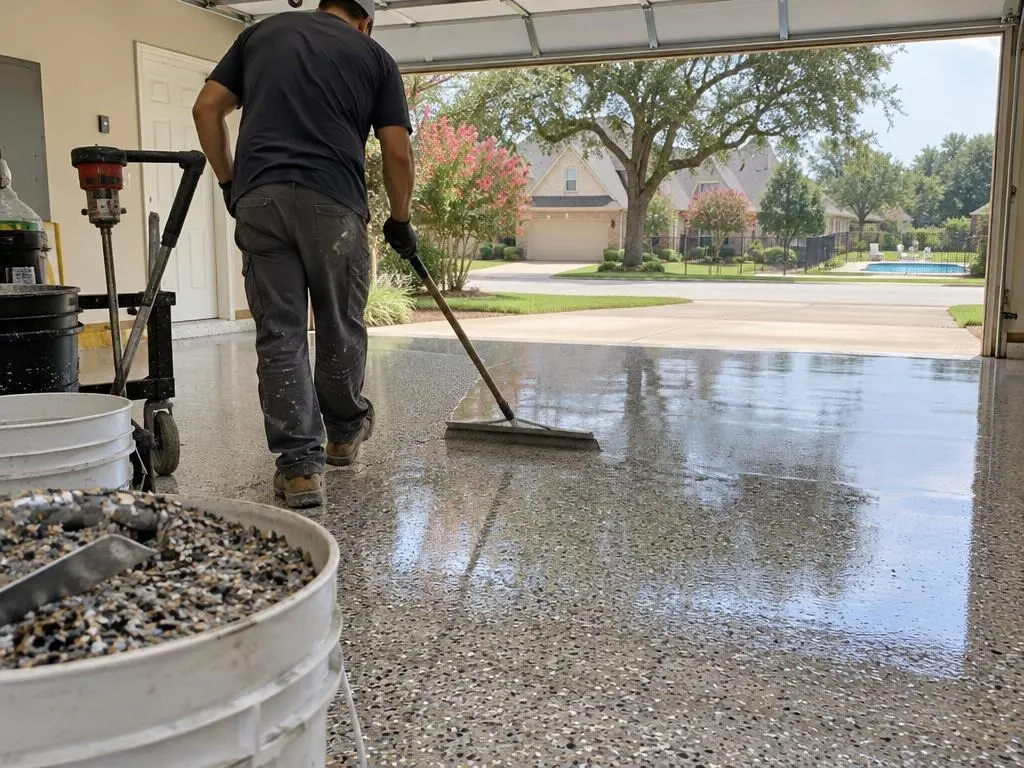
Commercial & Shop Floor Epoxy Questions
What does a commercial epoxy floor cost in Sugar Land?
HomeGuide puts installed epoxy at $4 to $10 per square foot nationally, and Bob Vila says traffic-grade systems run roughly 20% to 30% higher. Slab repairs, chemicals and night work change the number, so we price it after a site visit.
Can you do the work at night or over a weekend?
Yes. Night pours also help in summer because the slab is cooler. We split larger floors into zones so part of the building stays in use.
What holds up to forklifts and pallet jacks?
A ground, repaired slab with a thick 100% solids body coat and a hard wear coat. Thin coatings on a poorly prepared slab tend to fail first in the travel lanes.
Can you coat a hot metal shop building?
Yes. We schedule pours for the cooler hours and use polyaspartic where the heat cannot be avoided, since HomeGuide lists it for application up to 140°F.
Commercial & Shop Floor Epoxy Service Areas
- Epoxy Flooring in Sugar Land, TX
- Epoxy Flooring in Missouri City, TX
- Epoxy Flooring in Stafford, TX
- Epoxy Flooring in Meadows Place, TX
- Epoxy Flooring in Richmond, TX
- Epoxy Flooring in Rosenberg, TX
- Epoxy Flooring in Fulshear, TX
- Epoxy Flooring in Katy, TX
- Epoxy Flooring in Cinco Ranch, TX
- Epoxy Flooring in Mission Bend, TX
- Epoxy Flooring in Four Corners, TX
- Epoxy Flooring in Pecan Grove, TX
- Epoxy Flooring in Sienna, TX
- Epoxy Flooring in Fresno, TX
- Epoxy Flooring in Arcola, TX
- Epoxy Flooring in Pearland, TX
- Epoxy Flooring in Bellaire, TX
- Epoxy Flooring in West University Place, TX
- Epoxy Flooring in Weston Lakes, TX
- Epoxy Flooring in Houston, TX
Get a Commercial & Shop Floor Epoxy Estimate
Free site visits for shop, warehouse and commercial floors in Sugar Land and Fort Bend County.